Basic Life Support (BLS)
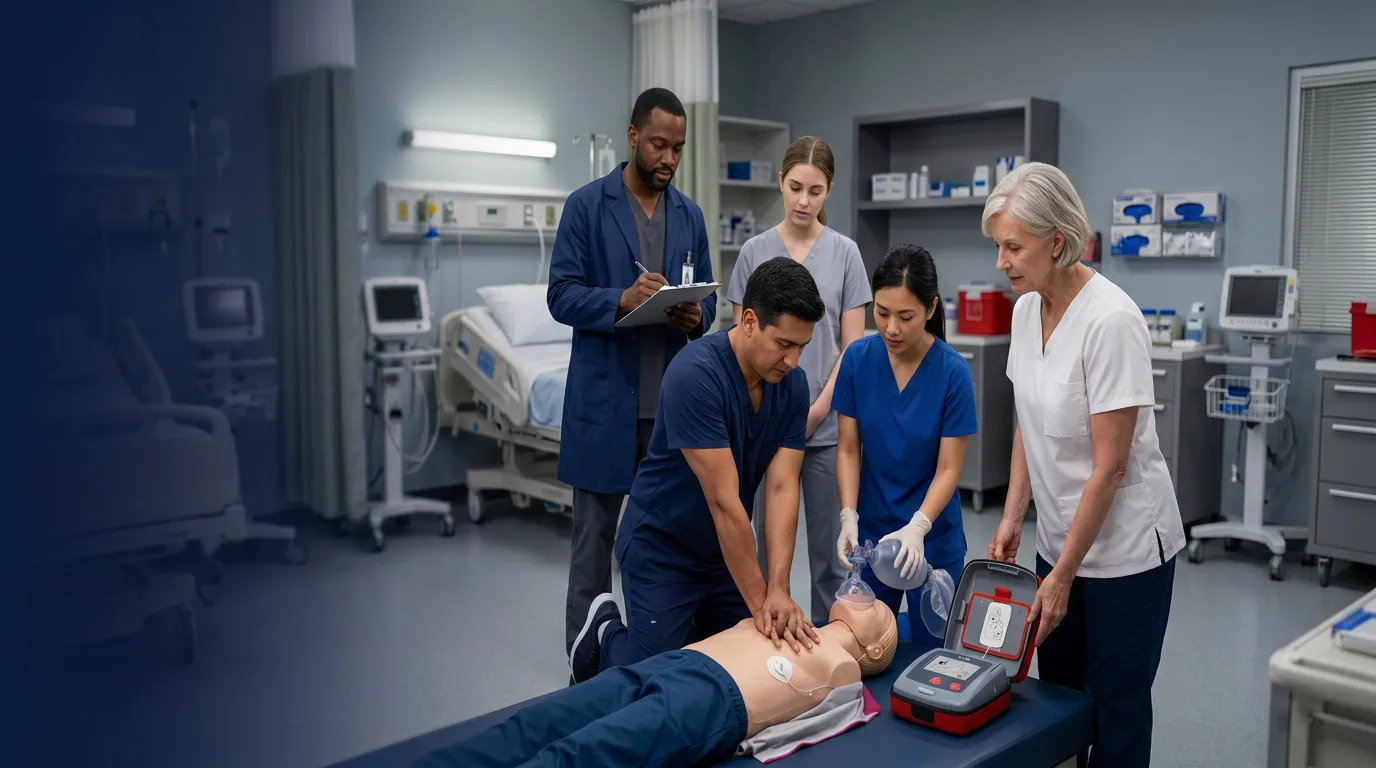
Basic Life Support for healthcare providers.
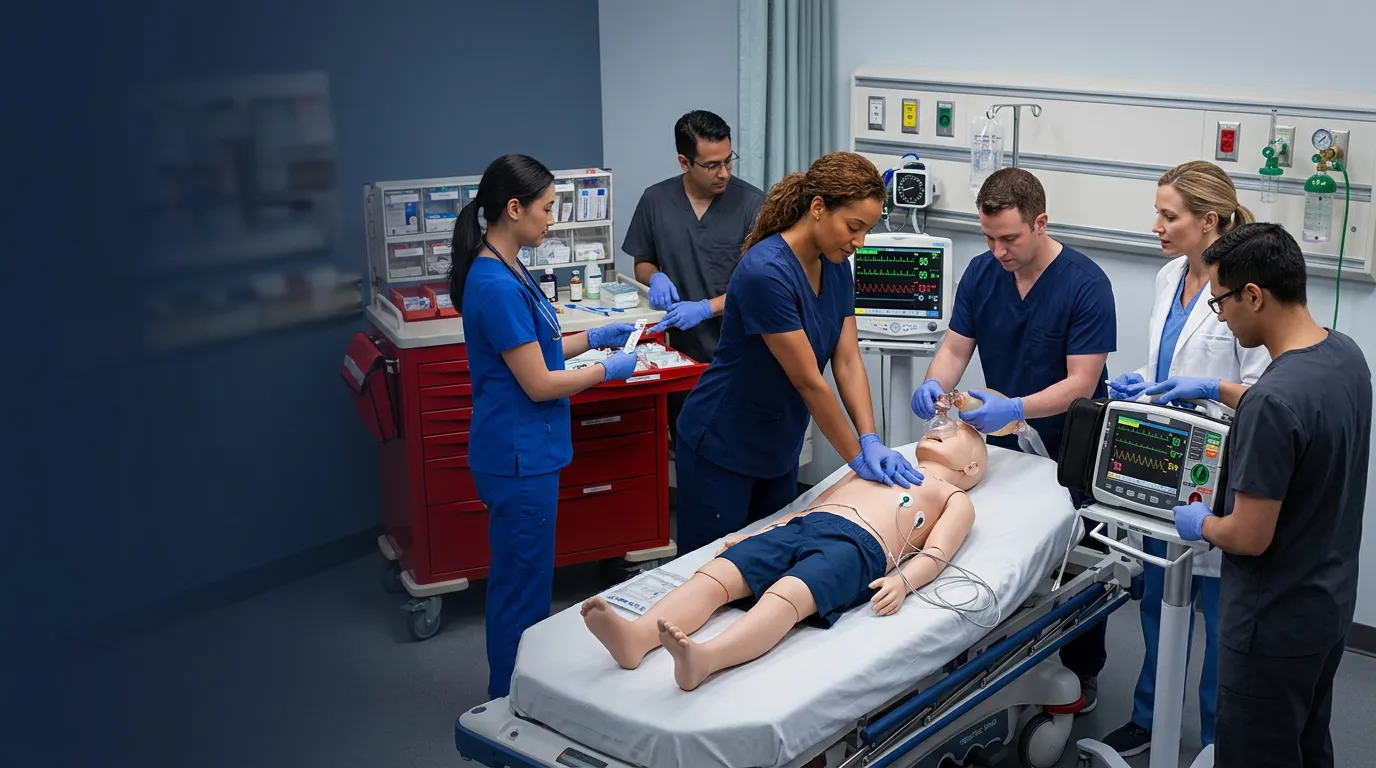
Healthcare providers caring for pediatric patients with respiratory emergencies, shock, and cardiopulmonary arrest.
Healthcare providers caring for pediatric patients with respiratory emergencies, shock, and cardiopulmonary arrest.
Hands-on, instructor-led. Classroom at our Mission site or onsite at your facility.
Classes run Tuesday, Thursday and Saturday, 9:00 AM to 5:00 PM. Call (956) 379-6196 to book.
The PALS Provider Course aims to improve outcomes for pediatric patients by preparing healthcare providers to effectively recognize and intervene in patients with respiratory emergencies, shock, and cardiopulmonary arrest by using high‐performance team dynamics and high‐quality individual skills. The course includes a series of case scenario practices with simulations that reinforce important concepts. Upon successful completion of all the patient cases, students must pass the multiple-choice exam with a minimum score of 84%.
After successfully completing this course, students will be able to:
Review shared on Google (opens in a new tab)I would 100% recommend getting or renewing your BLS certification at CPR Masters! Mrs. Reyes is a fantastic instructor and did an excellent job teaching the BLS skills. In the beginning, I was worried that I wouldn't succeed, but Mrs. Reyes was very patient, encouraging, and made sure I understood what I was doing. She created a comfortable learning environment and gave great feedback throughout the course. 10/10!
Review shared on Google (opens in a new tab)The BLS class was great! It was very informative, easy to follow, fast and efficient, and was a great refresher for me.
Review shared on Google (opens in a new tab)Mrs. Reyes was exceptional throughout the entire process of helping me obtain my BLS certification. She was incredibly patient, and took the time to ensure I understood everything!
Healthcare providers usually need BLS, and clinicians managing cardiac emergencies take ACLS or PALS. Workplaces, caregivers and community responders take a Heartsaver course. School staff take Heartsaver K–12, and anyone caring for infants and children takes Heartsaver Pediatric. If you are unsure, call (956) 379-6196 — and always confirm the exact requirement with your employer or school.
Requirements vary by employer, licensing board, school, and profession. CPR Masters RGV offers American Heart Association courses, but you should confirm the exact certification required by your employer or regulatory agency before registering. If you are unsure which course you need, call us at (956) 379-6196 and we can help you identify the appropriate course; final acceptance is determined by your employer or licensing authority.
Course completion cards are issued for the specific course successfully completed, such as BLS, ACLS, PALS, or Heartsaver CPR AED/First Aid. American Heart Association course completion cards are generally valid for two years from the date of issue. Your card identifies the specific course completed and its expiration date.
Call (956) 379-6196 or send a registration request through this site. We will confirm your class date and what to bring.
Basic Life Support for healthcare providers.
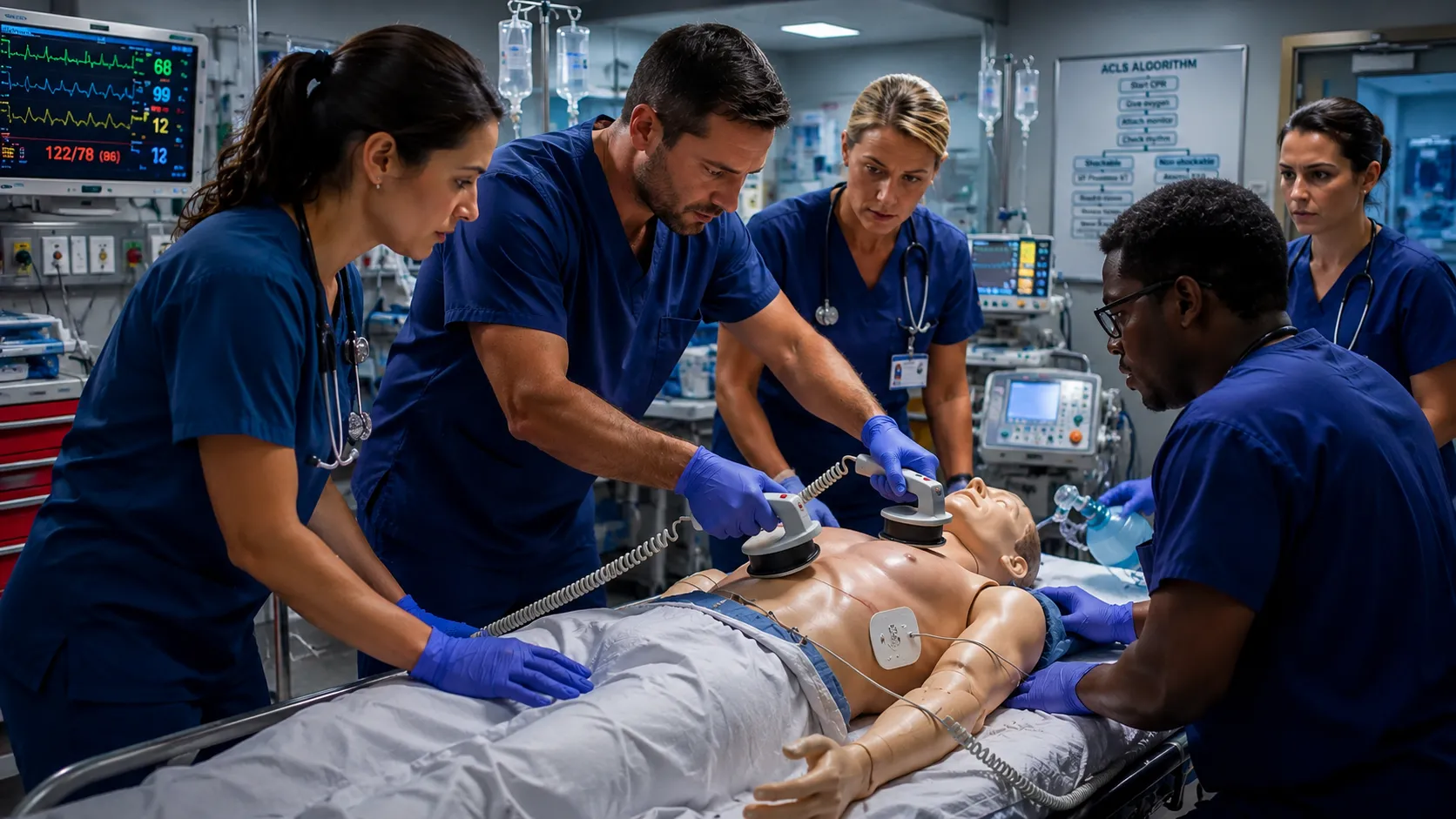
Advanced Cardiovascular Life Support certification.
We come to your facility anywhere in the Rio Grande Valley and train your whole team together.
Quick Answers
Straight from our FAQ
Hi! I can answer common questions about courses, scheduling, completion cards and group training, using the same answers as our FAQ page. I'm not a person and I can't quote a price. For pricing, or anything I can't answer, give us a call and an instructor will help you.
Common questions